Transforming the Diagnostics of Marginal Zone Lymphomas by Integrating Digital Pathology, Molecular Biology and Artificial Intelligence
In collaboration with Prof. Davide Rossi (Institute of Oncology Research, Bellinzona) and Prof. Luca Mazzucchelli (EOC, Istituto Cantonale di Patologia, Locarno)
NMZL is a rare and poorly understood B-cell malignancy. Its diagnosis is complex and not reproducible since NMZL often mimics other lymphomas, leading to frequent misclassification and consequent inappropriate patient treatment.
IELSG52 is an international retrospective, observational, case-control study (NCT05700149) involving more than 900 patients worldwide. It comprises 70% of cases centrally confirmed as NMZL (cases), and 30% as non-NMZL lymphomas (also called mimickers, as controls).
The objective of the project is to develop and validate a robust deep learning-based classifier for a more precise and reproducible diagnosis of NMZL versus mimickers. This will be achieved by utilizing a multimodal dataset to train Deep Learning Models. The multimodal dataset includes IELSG52 patients’ clinical annotations, extensive molecular profiling (exome sequencing and DNA methylation), centralized pathology review consensus diagnosis and annotations, along with high-dimensional data from hematoxylin-eosin and immunohistochemistry-stained whole-slide images.
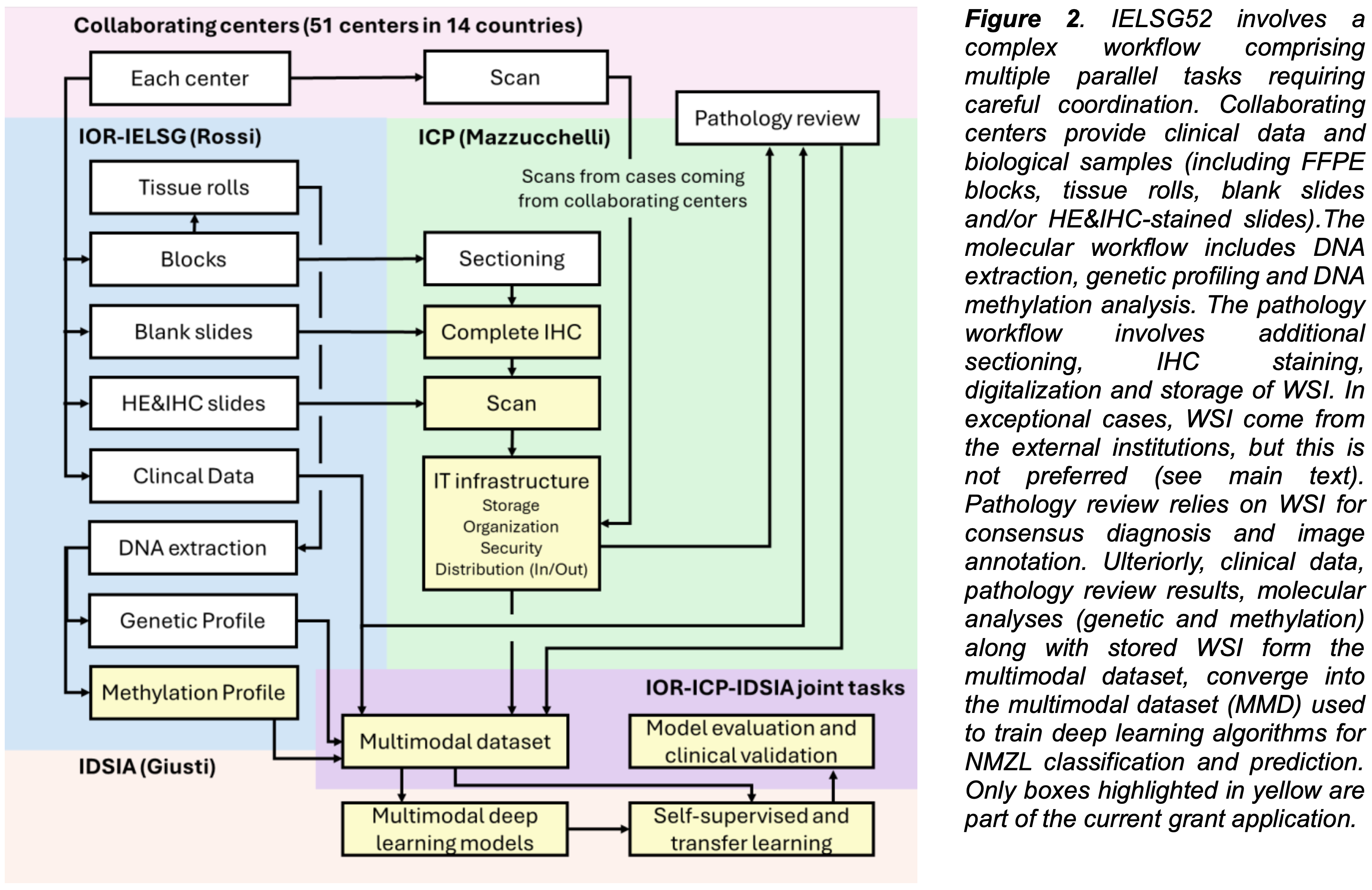
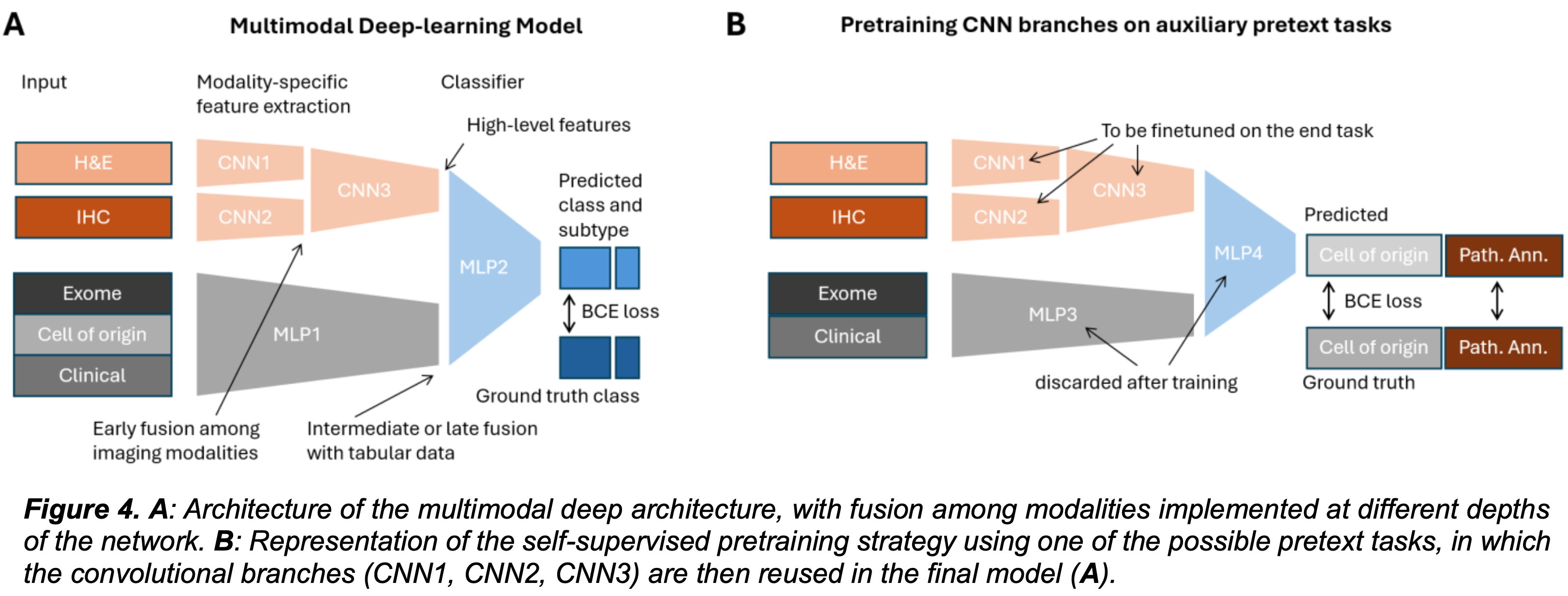
State-of-the-art Multimodal Deep Learning techniques will be adopted, also relying on Self-Supervised paradigms that enable learning powerful pattern recognition models from limited amounts of labelled data. Finally, an online tool will be made available for accurate NMZL diagnosis prediction, aiming to help pathologists and clinicians in this difficult and not reproducible task.
The outcomes of this comprehensive interdisciplinary approach to NMZL could impact on the future lymphoma classification (WHO and ICC), and also set the stage for similar applications in other lymphomas and solid tumors. By improving diagnostic accuracy and complementing the efforts of pathologists and clinicians, these advancements may improve decision-making and therapeutic strategies, ultimately benefiting patients.