PRAESIIDIUM: Physics-informed machine learning-based prediction and reversion of impaired fasting glucose management
Funded by the European Union and SERI
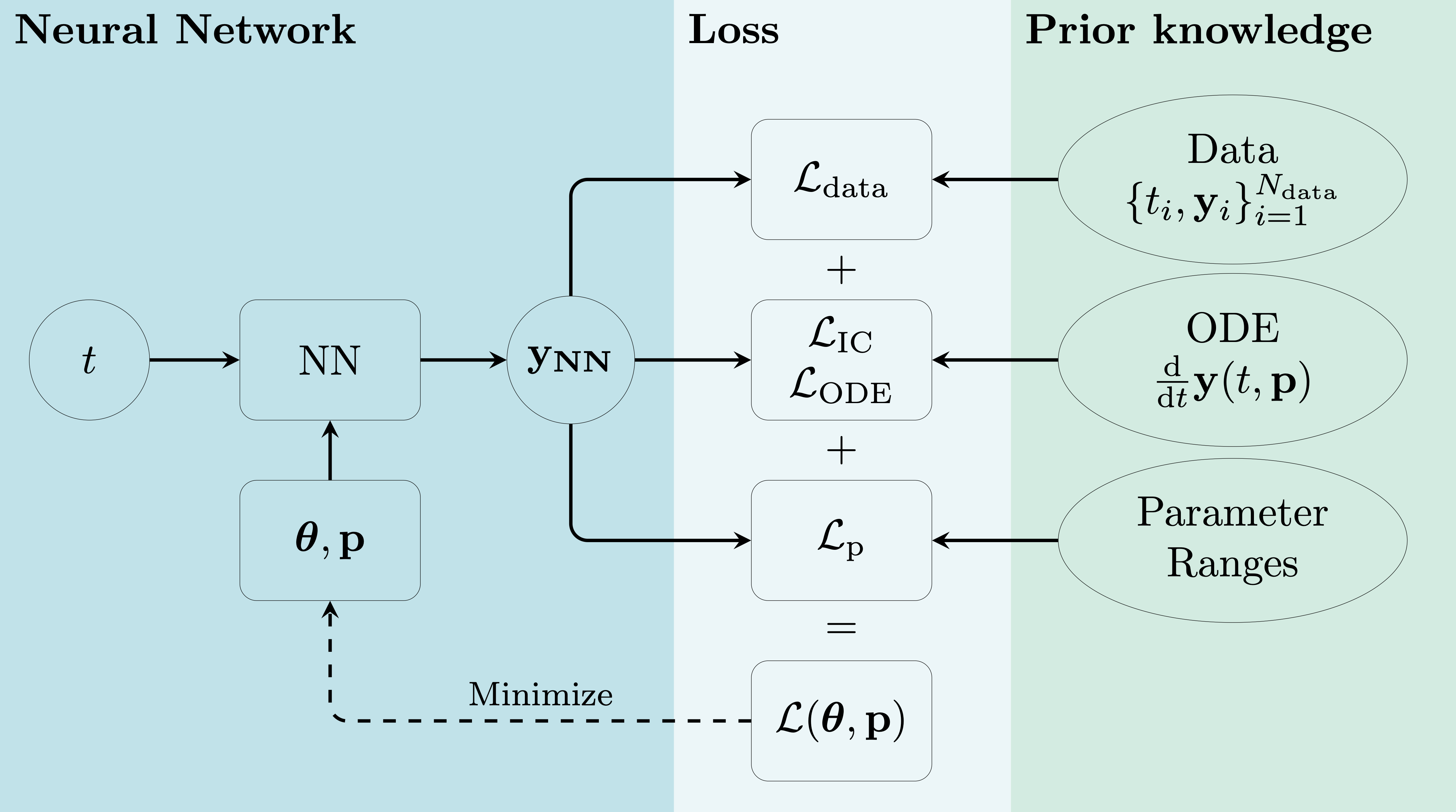
Globally, 541 million adults have blood glucose levels above normal but not yet high enough to be classified as diabetes, a condition known as prediabetes. With timely intervention, prediabetes is reversible through healthy lifestyle changes. While mathematical models can provide detailed, patient-specific insights by simulating metabolic and inflammatory processes, their computational cost often makes them impractical for real-time risk prediction.
PRAESIIDIUM bridges this gap by combining physics-informed machine learning with multi-scale, multi-organ mathematical models based on differential equations to build a digital twin of each patient. This digital twin simulates individual metabolic and inflammatory processes in real time, enabling dynamic risk prediction for prediabetes. By integrating clinical records and data from wearable sensors, the system supports early detection and personalized prevention strategies.
At IDSIA, we lead the development of the physics-informed machine learning algorithms for PRAESIIDIUM. Our work integrates differential equation models with state-of-the-art machine learning and causal inference methods to support real-time, personalized risk prediction for prediabetes. This includes building computationally efficient and interpretable surrogates for complex physiological models, and developing data-driven causal models to assess the impact of lifestyle changes.